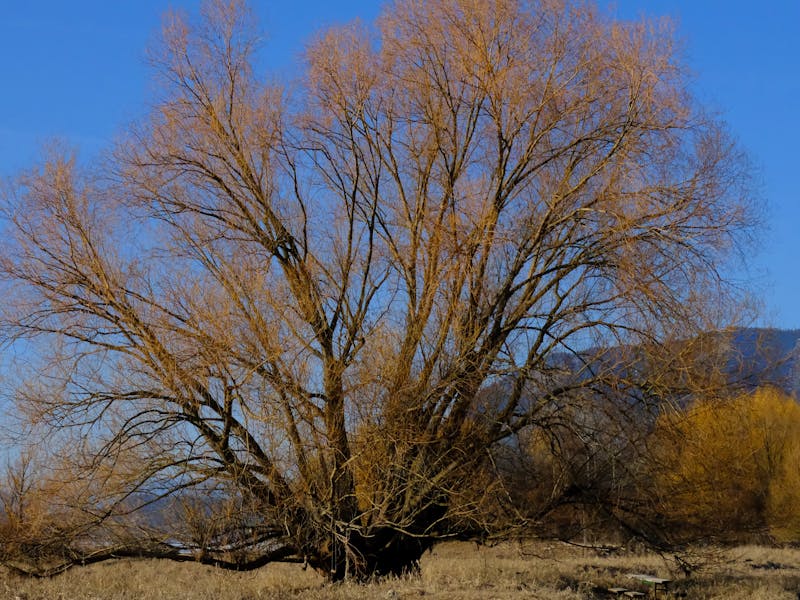
Quick Facts: Willow Oak
Quercus phellos
40-75 ft
Medium
Full sun
Moist, well-drained, acidic; tolerates clay
USDA Zones 5b-9a
Atlanta's Favorite Street Tree
The Willow Oak (Quercus phellos) is widely considered one of the top shade and street trees for the Atlanta metro area. Fine-textured, willow-like foliage sets it apart from other oaks and lends a graceful, airy look that's hard to match. Willow oaks grow at a moderate to fast clip, topping out at 40 to 75 feet tall with a spreading, pyramidal to oval crown. You'll spot them lining streets, filling parks, and anchoring residential lots throughout Decatur, Buckhead, Midtown, and other Atlanta neighborhoods.
Compared to the water oak, the willow oak brings stronger wood and better branch architecture to the table, making it a far more dependable long-term shade tree. It shrugs off urban stresses like compacted soils, tight root space, and air pollution. That grit is a big reason willow oaks perform so well in Atlanta's urban and suburban settings. With proper care from an ISA-certified arborist, willow oaks can live 100 years or more.
Identifying a Willow Oak
The leaves are the giveaway. Instead of the lobed leaves you expect from an oak, willow oaks produce narrow, lance-shaped leaves that look like willow foliage. Each leaf runs 2 to 5 inches long and less than an inch wide, with a smooth margin and a small bristle at the tip. Bright green in summer, they shift to yellow or russet brown in fall and often cling to the tree well into winter.
Young bark is smooth and gray-brown. With age it darkens and develops narrow, irregular ridges and furrows. The acorns are small, about half an inch in diameter, nearly round, and sit in a thin, shallow cap. They ripen in the second year and drop in big numbers, which can be a nuisance on sidewalks and driveways.
Young willow oaks grow in a pyramidal shape that broadens into a rounded oval over time. The fine-textured foliage filters sunlight into dappled shade, which actually lets grass grow underneath. That's a real advantage over dense-canopied oaks that kill everything below them.
Growing Conditions in Atlanta
Willow oaks want full sun and moist, well-drained, acidic soils. In Atlanta, they perform best where soil pH sits below 6.5. They handle clay well and can tolerate occasional flooding, so low-lying spots on Atlanta properties are fair game. Prolonged drought is their weak point; without supplemental irrigation during dry spells, they'll struggle.
Give them space. Plant willow oaks at least 40 feet from structures and other large trees, in areas that receive at least six hours of direct sunlight. When planting in Atlanta's clay, amend the planting area generously and mulch heavily to improve soil conditions as the tree establishes.
Common Problems and Diseases
Bacterial Leaf Scorch is the most destructive disease targeting willow oaks in the Atlanta area. The bacterium Xylella fastidiosa is behind it, producing brown, scorched-looking leaf margins that worsen each growing season. Over time, the bacteria plug water-conducting vessels inside the tree and drive a gradual decline. No cure exists, but plant health care treatments including antibiotic injections can put the brakes on progression.
Iron Chlorosis crops up when willow oaks end up in alkaline soils with a pH above 7.0. The telltale sign: leaves yellowing between the veins while veins stay green. We run into this frequently in newer Atlanta subdivisions where grading and construction have scrambled the soil chemistry. Lowering pH with soil amendments and supplementing iron through trunk injection or soil application usually corrects the problem.
Care and Maintenance
Regular pruning helps willow oaks build strong structure and hold an attractive shape. Start young trees with a single dominant leader and remove competing branches. Mature trees benefit from periodic crown cleaning to clear dead wood and manage size. Best pruning window in Atlanta: late fall through winter.
Keep the soil acidic. Apply sulfur or acidifying fertilizers as soil testing indicates, and maintain a 3 to 4 inch layer of organic mulch around the tree to help hold acidity and moisture. Water deeply during drought periods, especially for trees less than 10 years old.
When to Call an Arborist
Call an ISA-certified arborist if you notice progressive leaf scorching, yellowing foliage suggesting chlorosis, large dead branches, or other signs of decline. Catching bacterial leaf scorch early can stretch a tree's productive life by many years. Our team at EastLake Tree Services offers diagnostic services and customized plant health care programs for willow oaks throughout metro Atlanta.
Atlanta-Specific Tips
Willow oaks thrive in Atlanta's naturally acidic soils, but watch out near new construction where lime or concrete dust may have bumped up the pH. Test your soil before planting and annually for the first few years. During Atlanta's summer heat waves, give supplemental water to keep the canopy healthy. Willow oaks handle ice storms reasonably well thanks to their flexible branches and fine-textured foliage, though young trees may need corrective pruning after significant ice events.