Quick Facts: Flowering Dogwood
Cornus florida
15-30 ft
Slow
Partial shade to dappled sunlight
Moist, well-drained, acidic, rich in organic matter
USDA Zones 5-9
Georgia's Beloved State Tree
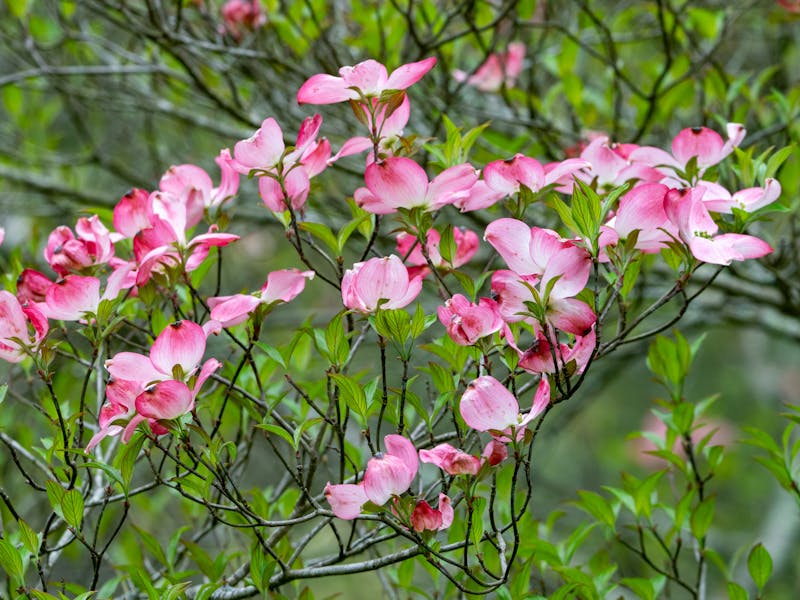
The Flowering Dogwood (Cornus florida) holds a special place in Georgia's heart as the official state tree. Across Atlanta, dogwoods light up in early to mid-April, unfurling iconic white (or pink) bracts that drape the understory of neighborhood forests and side streets. The annual Atlanta Dogwood Festival, one of the oldest festivals in the country, marks that arrival each spring. There's a reason for the fuss. Few trees stamp the character of an Atlanta neighborhood quite like mature dogwoods layered beneath towering oaks and pines.
Flowering dogwoods top out at 15 to 30 feet with a graceful, layered, horizontal branching habit. They deliver four-season interest: spring flowers, dense summer foliage, rich red fall color, and striking bare architecture once the leaves drop. Disease pressure over the past few decades has made attentive care non-negotiable, though. An ISA-certified arborist can help keep your dogwoods healthy and looking their best.
Identifying a Flowering Dogwood
That layered branching habit is the first giveaway. Four large, white or pink "petals" (actually modified leaves called bracts) surround tiny, yellowish-green flower clusters at the center. Leaves are opposite, simple, oval, 3 to 6 inches long, with prominent veins that arc toward the leaf tip. In Atlanta's climate, fall color swings from red to reddish-purple and can be genuinely showstopping.
Mature bark cracks into small, square blocks, forming the distinctive alligator-hide pattern that makes dogwoods easy to spot even in winter. Bright red berry-like fruits (drupes) cluster in fall, feeding cardinals, bluebirds, and other wildlife. Already holding next April's show, flattened, onion-shaped flower buds sit at branch tips all winter long.
Growing Conditions in Atlanta
In Atlanta's forests, dogwoods are naturally understory trees, tucked in dappled shade beneath taller canopy species. That's their sweet spot: partial shade, sheltered from punishing afternoon sun, planted in moist, well-drained, acidic soil rich in organic matter. Position dogwoods on the east or north side of buildings or beneath the canopy of larger trees for the best results in Atlanta's landscape.
Drought stress hits dogwoods hard. That's a genuine worry during Atlanta's hot, dry summers. Steady moisture through regular watering plus a 3 to 4 inch blanket of organic mulch over the root zone makes all the difference. Steer clear of full-sun or exposed spots, which crank up stress and invite disease.
Common Problems and Diseases
Dogwood Anthracnose, caused by the fungus Discula destructiva, has been the most devastating disease of flowering dogwoods since its discovery in the 1970s. Watch for tan spots ringed in purple on leaves, progressive twig and branch dieback, and cankers forming on the trunk. Cool, wet, shaded conditions fuel the pathogen. Boosting tree vigor, opening up airflow, and ditching overhead irrigation are the front-line defenses. Plant health care programs, including targeted fungicide applications, can shield prized dogwoods from further decline.
Powdery Mildew has grown steadily more common on dogwoods across the Atlanta area. That white, powdery fungal coating looks awful and can force early leaf drop. Planting resistant varieties and improving air circulation cuts mildew problems noticeably.
Borers, especially the dogwood borer, zero in on stressed trees. Larvae chew tunnels under the bark, slipping in through wounds or cracked bark areas. Best defense? Consistent watering, generous mulching, and keeping mowers well away from the trunk.
Care and Maintenance
Dogwoods thrive on minimal but deliberate care. Spread a wide mulch ring to keep roots cool and damp. Water deeply during dry spells, especially from June through September. That's when Atlanta's heat really bears down. A light spring feeding with an acidic, slow-release fertilizer helps, but go easy on nitrogen. Too much pushes soft growth that invites disease.
Prune sparingly. Remove only dead or diseased wood, and time your cuts for late winter before flower buds crack open. Keep mowers and string trimmers away from the trunk by maintaining a grass-free mulched buffer around the base.
When to Call an Arborist
Reach out to an ISA-certified arborist if you spot heavy leaf spotting, creeping branch dieback, trunk cankers, or borer damage. Catching anthracnose early can save a treasured dogwood. Our team at EastLake Tree Services runs diagnostic and treatment programs built specifically for Atlanta's dogwood population.
Atlanta-Specific Tips
Planting new dogwoods in Atlanta? Lean toward disease-resistant cultivars like 'Appalachian Spring' (resistant to anthracnose) or Kousa dogwood hybrids such as the Stellar Series, which pair disease resistance with gorgeous flowers. Don't site them near existing diseased dogwoods. Atlanta's urban heat island effect piles extra stress on these trees, so scout for shaded, cooler microclimate pockets in your landscape. Guard the trunk bark from lawn equipment nicks, too, since wounds are the main entry points for borers and disease.