Quick Facts: Red Maple
Acer rubrum
40-70 ft
Fast
Full sun to partial shade
Moist, slightly acidic; tolerates clay and wet conditions
USDA Zones 3-9
Beautiful Fall Color for Atlanta Landscapes
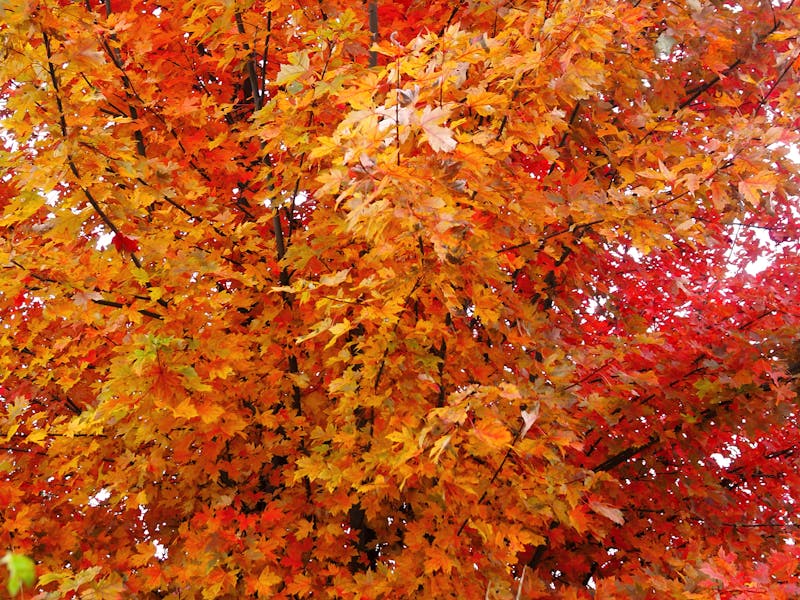
The Red Maple (Acer rubrum) earns its name three times over: red flowers in late winter, red-tinged samaras (helicopter seeds) in spring, and brilliant red fall foliage. It's one of the most widely planted native shade trees across the Atlanta area, valued for quick growth, broad adaptability, and a knockout autumn show. Mature red maples climb 40 to 70 feet with a rounded to oval crown, throwing generous shade over Atlanta homes and yards.
These trees are among the first to turn each autumn, often coloring weeks ahead of oaks. Named cultivars like 'October Glory,' 'Red Sunset,' and 'Autumn Blaze' (a hybrid with silver maple) were picked for dependable, saturated fall color. In Atlanta's USDA zones 7b-8a red maples grow well, but they need attention to soil conditions and moisture if you want them looking their best.
Identifying a Red Maple
Red maple leaves are opposite, 2 to 6 inches across, with 3 to 5 palmate lobes split by shallow, V-shaped sinuses. Margins are irregularly serrated. Green above and whitish beneath in summer, the foliage shifts to red, orange, or yellow once cool nights arrive. Bark starts smooth and light gray on young trees, then darkens and fractures into long, scaly, platy ridges as the trunk thickens.
Late February to early March brings a quiet spectacle: small, bright red flower clusters dotting the branches before a single leaf appears. It's one of Atlanta's earliest signs that spring is close. The winged seeds (samaras) ripen through April and May, blushing red before they spiral down.
Growing Conditions in Atlanta
Red maples are remarkably unfussy about Atlanta's growing conditions. Clay soil? They handle it. Wet ground? They actually prefer it. Slightly acidic soil (pH 5.5-6.5) suits them best, and alkaline conditions can trigger chlorosis. Full sun coaxes the strongest fall color out of them, though partial shade works fine.
Despite their fondness for damp sites, red maples manage average moisture once their roots settle in. In Atlanta's heavy clay, work amendments into the planting area and mulch well. Water consistently during the first few years and through any drought stretches.
Common Problems and Diseases
Verticillium Wilt ranks among the most damaging diseases hitting red maples in Atlanta. This soil-borne fungal pathogen invades the vascular system, causing wilting, yellowing, and branch dieback, often on one side of the tree first. No chemical cure exists. Management hinges on bolstering tree vigor through proper watering, fertilization, and removal of dead branches. When decline is severe, tree risk assessment may show that removal is the safest path.
Leaf Scorch plagues red maples during Atlanta's hot, dry summers. Leaf margins go brown and papery, sometimes with a band of yellow between the scorched edge and green midrib. This isn't a disease. It's the tree's physiological distress signal from drought stress or radiated heat bouncing off pavement. Steady deep watering during dry spells and generous mulching go a long way toward heading it off.
Surface Root Damage is a persistent headache with red maples, which are infamous for shoving aggressive roots to the surface. Those roots can buckle sidewalks, jam up mowing, and become trip hazards. Resist the urge to cut them. Severing surface roots destabilizes the tree and opens corridors for decay. Mulching over the exposed roots is far smarter than burying them in soil or trying to rip them out.
Care and Maintenance
Red maples appreciate consistent watering during dry periods, particularly young trees and those baking in full sun. Spread mulch broadly to insulate roots and hold moisture. Spring fertilization should follow soil test results; switch to an acidifying formula if pH creeps above 6.5.
Time your pruning for late summer or early fall to dodge the heavy sap bleeding that follows spring cuts. Take out dead wood, crossing branches, and tight-crotch unions. Red maples tend toward included bark at branch junctions, so address structural weak points while the tree is still young.
When to Call an Arborist
Get in touch with an ISA-certified arborist if you notice one-sided wilting or dieback (a red flag for verticillium wilt), stubborn leaf scorch, or surface roots cracking hardscape. Our team at EastLake Tree Services can pin down the problem and recommend plant health care treatments to keep your red maple healthy and handsome for years to come.
Atlanta-Specific Tips
Want the best fall color in Atlanta? Go with named cultivars instead of seedling-grown trees. 'October Glory' and 'Red Sunset' are proven performers in zones 7b-8a. Keep red maples away from sidewalks, driveways, and foundations where surface roots will eventually cause grief. Plant at least 15 feet from any paved surface. Atlanta's summer heat and radiated warmth from dark pavement amplify leaf scorch, so carve out afternoon shade protection wherever you can.