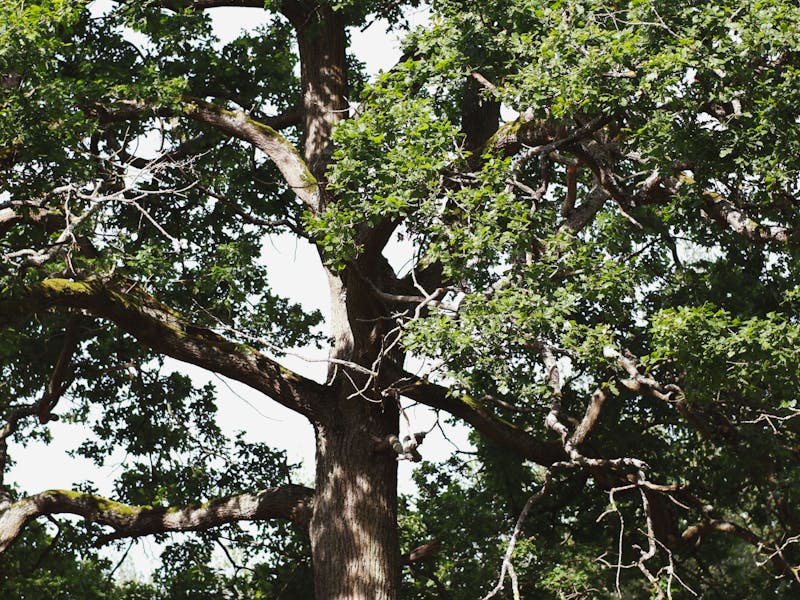
Quick Facts: White Oak
Quercus alba
60-80 ft
Slow
Full sun to partial shade
Deep, moist, well-drained, slightly acidic
USDA Zones 3-9
A Long-Lived Atlanta Treasure
The White Oak (Quercus alba) is one of the most stately and long-lived native trees anywhere in the Atlanta area. Mature white oaks, with their broad, sprawling crowns and thick trunks, are irreplaceable landmarks that can live 300 to 600 years. Walk through Atlanta's older neighborhoods and parks and you'll spot centuries-old white oaks that anchor the landscape in a way nothing planted recently can match. These trees grow slowly but reward your patience, eventually filling out into towering shade trees that noticeably boost property values.
Ask an arborist to name their favorite native shade tree and white oak lands at the top of most lists. The wood is dense enough to shrug off rot, and the branching pattern stays predictable for decades, which makes white oaks among the most dependable trees in any urban canopy. An investment in a white oak is an investment in a tree that may well outlive the house it shades.
Identifying a White Oak
White oak leaves are alternate, simple, 5 to 9 inches long, with 7 to 9 rounded lobes separated by deep, U-shaped sinuses. The lobe tips are smooth-edged (not bristle-tipped like red oaks). Leaves unfurl pinkish-red in spring, darken to green above and a chalky white beneath in summer, then shift to wine-red or purple in fall, often clinging to the branches well into winter.
Bark is the real giveaway on mature trees: light gray, broken into loose, vertical strips and scales with a shaggy texture. Acorns run about three-quarters of an inch long, oval, capped by a warty, bowl-shaped cup covering about one-quarter of the nut. They ripen in a single season and are the sweetest of all oak acorns, which is why wildlife targets them first.
Growing Conditions in Atlanta
White oaks need deep, moist, well-drained, slightly acidic soil. They send down a deep taproot early and struggle wherever the ground is compacted or shallow. In Atlanta, pick planting sites with real soil depth and good drainage. Full sun drives the strongest growth and best form, though young trees handle partial shade without complaint.
These trees are notoriously stubborn to transplant because of that taproot. Stick to young trees (caliper 2 inches or less) for the best establishment odds. Once rooted in, white oaks tolerate moderate drought but still grow faster with steady moisture through the first decade.
Common Problems and Diseases
Oak Wilt can hit white oaks, though they fight it off better than red oaks. White oaks compartmentalize the infection more aggressively, sometimes pulling through if the disease is caught early. Symptoms creep in slower than in red oaks, with gradual leaf browning and a thinning canopy over one or more seasons. Avoid pruning during the growing season, when sap-feeding beetles can carry the pathogen to fresh wounds.
Gypsy Moth (now called spongy moth) is an expanding threat in the southeastern United States. While not yet a serious problem in Atlanta, these leaf-stripping caterpillars target oaks above most other species and could become a real concern as their range pushes south. Watch for egg masses (tan, fuzzy patches on bark and outdoor surfaces) and report sightings to the Georgia Forestry Commission.
Powdery Mildew occasionally shows up on white oak foliage, mainly in shaded, muggy conditions. The dusty white coating on leaves looks rough but is generally cosmetic and won't threaten the tree's overall health.
Care and Maintenance
Mature white oaks need very little upkeep. Guard the root zone from compaction and grade changes. Prune only in dormant season (November-February) to cut oak wilt risk. Remove dead branches and correct structural issues while trees are young. Skip the fertilizer on mature specimens unless soil tests flag a specific deficiency.
The single most important thing you can do for a big white oak is shield it from construction damage. Fence off a tree protection zone at least as wide as the drip line before any grading or building starts on the property. Even minor root disturbance or soil compaction can set off a slow, irreversible decline in these sensitive trees.
When to Call an Arborist
Contact an ISA-certified arborist if you notice progressive canopy thinning, dead branches, or signs of oak wilt. For mature white oaks near structures, periodic risk assessments help catch developing hazards before they turn into emergencies. Our team at EastLake Tree Services has the experience to care for Atlanta's most irreplaceable heritage trees.
Atlanta-Specific Tips
Got the space and the patience? Planting a white oak is one of the best gifts you can give your property and future generations. Start with a small tree from a local nursery grown from Georgia seed stock for the strongest adaptation. Protect the sapling from deer browse until it's well established. In Atlanta's clay soils, amend the top layer and mulch broadly, but don't try to overhaul the native soil deep in the planting hole. White oaks adapt to clay as long as drainage holds up. It's a long-term commitment, no question, but nothing else we plant around here matches the shade, beauty, and ecological return over a lifetime.