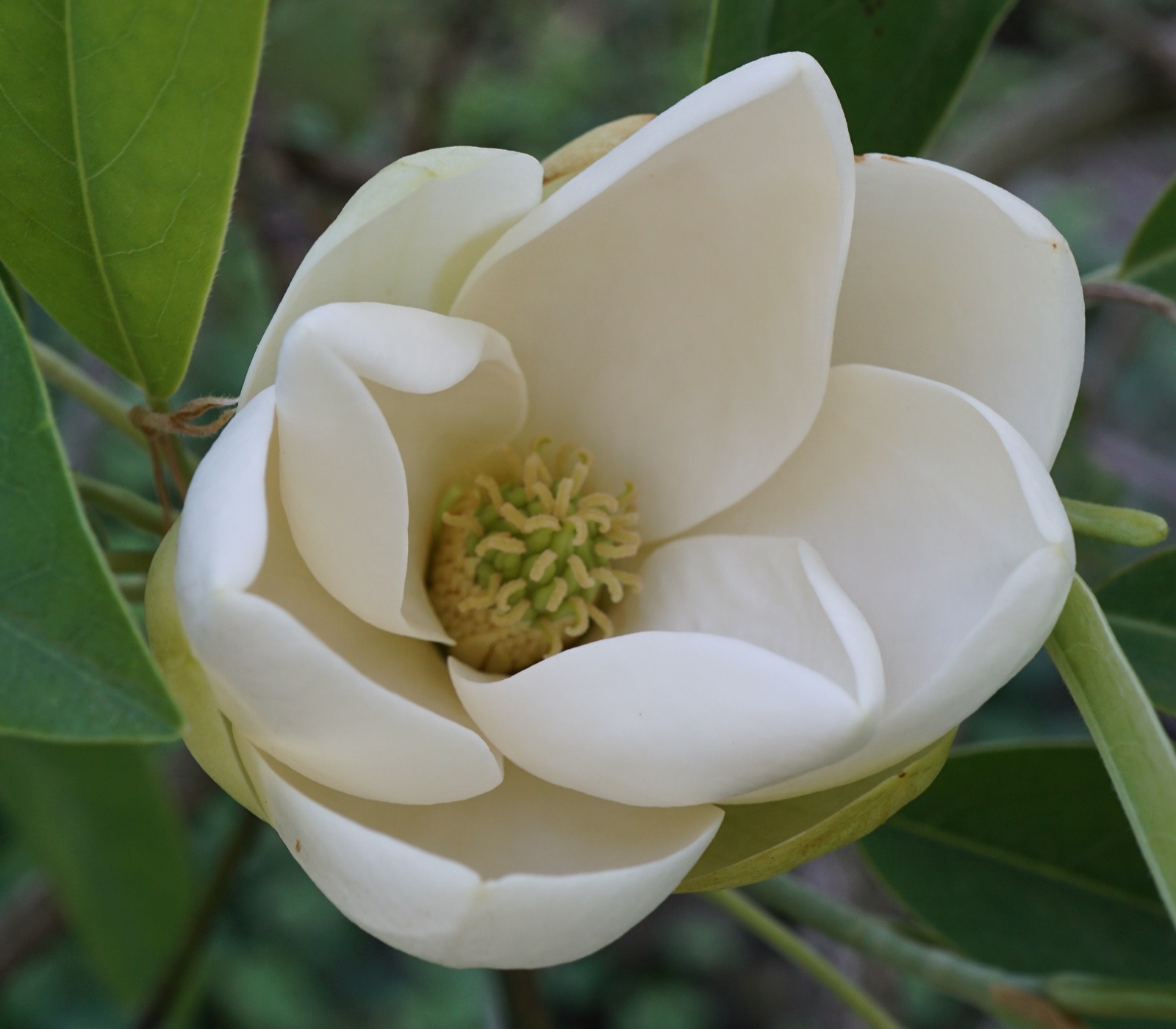
Quick Facts: Sweetbay Magnolia
Magnolia virginiana
15-35 ft
Moderate
Full sun to partial shade
Acidic, moist; tolerates wet sites
USDA Zones 5-10
Why Sweetbay Magnolia Thrives in Atlanta
The Sweetbay Magnolia (Magnolia virginiana) is one of the most versatile native trees for Atlanta landscapes, offering fragrant creamy-white flowers, attractive silvery-backed foliage, and an elegant, open form. In Atlanta's USDA zones 7b-8a, Sweetbay Magnolia is semi-evergreen, retaining many of its leaves through mild winters and dropping them briefly in early spring. This characteristic provides year-round screening and visual interest that fully deciduous trees cannot match.
Reaching 15 to 35 feet in height, Sweetbay Magnolia is significantly smaller than its cousin the Southern Magnolia, making it an excellent choice for smaller Atlanta lots, patios, and foundation plantings. The lemon-scented white flowers appear from late May through July, a much longer bloom period than most flowering trees. The glossy green leaves with distinctive silvery-white undersides shimmer attractively in the breeze, creating a two-toned effect that is unique among Atlanta landscape trees.
Care Tips for Atlanta Sweetbay Magnolias
Sweetbay Magnolia's greatest strength in the Atlanta landscape is its tolerance for wet, poorly drained sites where many other trees struggle. This makes it an ideal choice for rain gardens, stream banks, low-lying areas, and those chronically soggy spots in Atlanta's clay-heavy soils. While it thrives in moist conditions, Sweetbay also performs well in average garden soil with adequate moisture.
Plant in acidic soil with consistent moisture. In drier Atlanta sites, provide supplemental irrigation during summer droughts to prevent drought stress. Mulch generously with 3 to 4 inches of pine straw or hardwood mulch to conserve moisture and maintain the acidic soil conditions this tree prefers.
Structural pruning is important for Sweetbay Magnolia, which often grows as a multi-stemmed tree. If a single-trunk form is desired, select one dominant leader early and remove competing stems. Multi-stem forms are attractive but watch for weak branch unions where stems emerge from the same point. Prune after flowering in mid-summer for best results.
Common Problems in Georgia
Magnolia Scale is the most serious pest of Sweetbay Magnolia in the Atlanta area. This large soft scale insect feeds on sap from branches and twigs, producing copious honeydew that leads to black sooty mold on leaves and bark. Heavy infestations weaken the tree and cause branch dieback. Horticultural oil treatments during the dormant season and targeted insecticide applications during the crawler stage in late summer are effective controls.
Verticillium Wilt can affect Sweetbay Magnolia, causing wilting and dieback of individual branches. Infected wood shows brown streaking when cut. Remove infected branches promptly and maintain tree vigor through proper watering and mulching.
Leaf Spot diseases may develop during wet spring weather, causing brown or black spots on foliage. These are typically cosmetic and do not require treatment. Improving air circulation through selective pruning helps reduce fungal issues.
Scale insects beyond magnolia scale can also be problematic, particularly in stressed trees growing in compacted urban soils.
When to Call an Arborist
Contact an ISA-certified arborist if you notice heavy scale infestations with sooty mold, sudden branch wilting, structural concerns with multi-stem forms, or declining vigor. Sweetbay Magnolia responds well to plant health care treatments when problems are caught early. Our team at EastLake Tree Services can help Atlanta homeowners select the best planting site and provide ongoing care for these beautiful native trees.