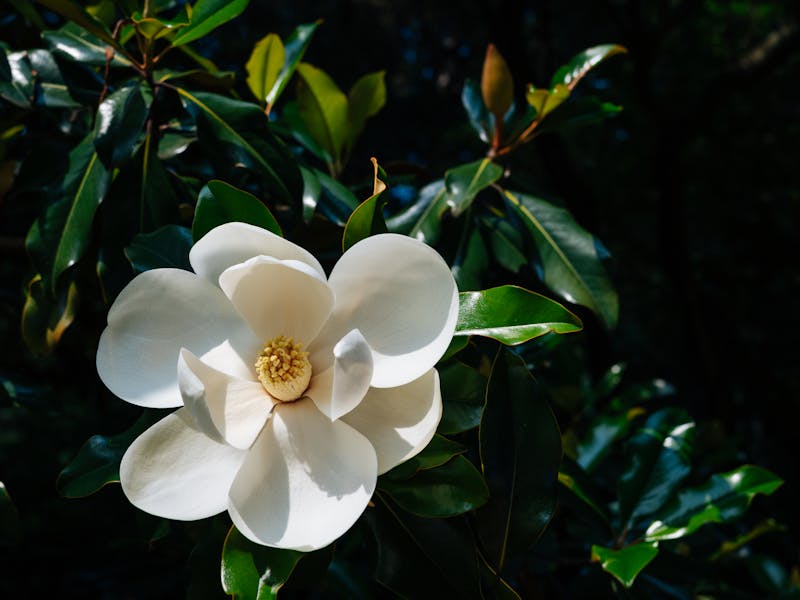
Quick Facts: Southern Magnolia
Magnolia grandiflora
60-80 ft
Slow to medium
Full sun to partial shade
Moist, acidic, well-drained; tolerates clay
USDA Zones 7-9
The Iconic Southern Tree
The Southern Magnolia (Magnolia grandiflora) is one of the most iconic trees of the American South. In Atlanta, mature magnolias with their massive, glossy-leafed canopies and fragrant white flowers are fixtures in front yards, along boulevards, and in parks across the city. These broadleaf evergreens provide year-round greenery, stunning late-spring flowers, and the unmistakable character of a southern landscape.
Growing 60 to 80 feet tall with a dense, pyramidal to rounded canopy, southern magnolias are substantial trees that require adequate space. They are slower growing than many Atlanta shade trees but compensate with their evergreen foliage, incredible flowers, and longevity. A well-cared-for magnolia can live well over a century, becoming more beautiful with age.
Identifying a Southern Magnolia
Southern magnolia leaves are unmistakable: large (5 to 10 inches long), thick, leathery, glossy dark green above, and fuzzy brown (tomentose) beneath. The leaves are evergreen but shed continuously throughout the year, with the heaviest drop in spring as new foliage emerges. This constant leaf drop is one of the tree's maintenance challenges.
The flowers are the magnolia's crowning glory: huge, creamy white, cup-shaped blooms up to 12 inches across with a sweet, lemony fragrance that perfumes entire neighborhoods. They appear from May through July in Atlanta. The bark is smooth and gray. The fruit is an aggregate of red seeds in a cone-shaped structure that opens in fall to reveal bright red seeds dangling on threads.
Growing Conditions in Atlanta
Southern magnolias prefer full sun to partial shade and moist, acidic, well-drained soil. In Atlanta's clay, ensure the planting area is well-amended and mulched extensively. These trees develop a dense, shallow root system that competes effectively with grass, meaning that maintaining a lawn under a magnolia is nearly impossible. Most arborists recommend mulching to the drip line and abandoning grass under the canopy.
Give magnolias plenty of room. The lower branches sweep to the ground on unpruned specimens, and the canopy can spread 40 feet or more. Do not plant close to structures, sidewalks, or driveways.
Common Problems and Diseases
Algal Leaf Spot is common on magnolias in Atlanta's humid climate. The algae Cephaleuros virescens creates raised, velvety green to orange-brown spots on leaf surfaces. While it rarely causes serious damage, heavy infestations indicate poor air circulation. Pruning to improve airflow through the canopy helps reduce algal growth.
Scale Insects, particularly magnolia scale and false oleander scale, can infest leaves and twigs. Heavy infestations cause yellowing, honeydew production, and sooty mold. Dormant oil sprays and systemic insecticide treatments through a plant health care program are effective controls.
Messy Leaf Drop is the most common homeowner complaint about southern magnolias. The thick, leathery leaves shed year-round and decompose slowly, creating a persistent litter issue. This is a natural characteristic, not a disease, and must be managed through regular cleanup or acceptance.
Care and Maintenance
Prune magnolias in late spring after flowering. Remove lower limbs for clearance if needed, dead or damaged branches, and interior growth to improve air circulation. Magnolias bleed sap from pruning cuts, so avoid unnecessary cuts. Maintain a wide mulch ring over the root zone and water during extended dry periods.
Fertilize in early spring with an acidifying fertilizer. Avoid piling soil or mulch against the trunk, which promotes bark decay and disease.
When to Call an Arborist
Contact an ISA-certified arborist for scale insect treatment, structural pruning on large specimens, or assessment of any decline symptoms. EastLake Tree Services provides expert magnolia care throughout the Atlanta metro area.
Atlanta-Specific Tips
For smaller Atlanta lots, consider compact cultivars like 'Little Gem,' 'Bracken's Brown Beauty,' or 'Teddy Bear' that mature at 20 to 30 feet. These provide the magnolia experience at a more manageable size. In Atlanta's clay, mulch heavily to the drip line rather than trying to grow grass under the canopy. The shed leaves create excellent natural mulch if left in place. During rare hard freezes below 10 degrees in zone 7b, young magnolias may suffer foliage damage but typically recover in spring.