Quick Facts: Green Giant Arborvitae
Thuja 'Green Giant'
40-60 ft
Very fast (3-5 ft/year)
Full sun to partial shade
Well-drained; adaptable to various types
USDA Zones 5-8
A Superior Privacy Screen for Atlanta
Green Giant Arborvitae (Thuja 'Green Giant') has emerged as the leading alternative to Leyland Cypress for privacy screening in metro Atlanta. This hybrid between Japanese arborvitae and western red cedar grows 3 to 5 feet per year, quickly forming a dense, dark green screen. Its most significant advantage over Leyland Cypress is dramatically better disease resistance, particularly against the devastating Seiridium canker that has destroyed countless Leyland cypress screens across Atlanta.
Growing 40 to 60 feet tall with a naturally dense, pyramidal form, Green Giant requires minimal shearing to maintain an attractive shape. It is becoming the go-to recommendation from arborists and landscape professionals throughout the Atlanta metro area when clients want fast evergreen screening. Our plant health care programs can help establish and maintain healthy Green Giant screens.
Identifying Green Giant Arborvitae
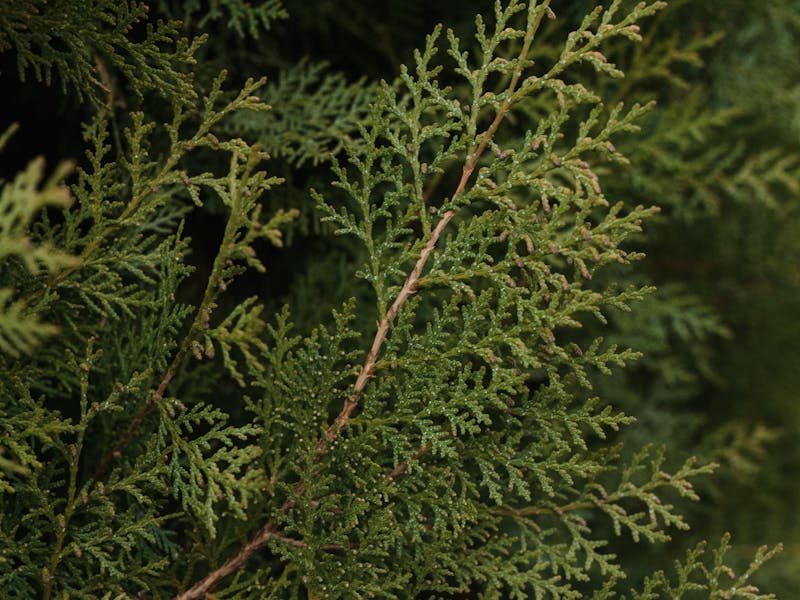
Green Giant has flat sprays of aromatic, dark green, scale-like foliage that maintains its color well through winter without the bronzing seen in some arborvitae. The form is naturally dense and pyramidal with a slightly wider base, tapering to a pointed top. The bark is reddish-brown and fibrous. Small, oblong cones may appear but are not particularly noticeable.
Green Giant maintains a more natural, full appearance than Leyland Cypress and does not tend to develop the thin, open base that plagues older Leylands. This dense, ground-to-top coverage is one reason it makes a superior privacy screen.
Growing Conditions in Atlanta
Green Giant thrives in full sun to partial shade across Atlanta's zones 7b-8a. It prefers well-drained soil but adapts to most types including clay, provided drainage is adequate. Space plants 5 to 6 feet apart for a continuous screen, or 8 to 10 feet apart for distinct specimens. Avoid sites where water pools or soil stays consistently saturated.
Water regularly during the first two growing seasons to establish a deep root system. Once established, Green Giant is moderately drought-tolerant, though supplemental watering during extended dry periods in summer will maintain the best appearance.
Common Problems and Diseases
Bagworms are the primary pest concern for Green Giant in Atlanta. These caterpillars build protective bags on branches and can defoliate sections of the tree. Because arborvitae do not regenerate bare branches, bagworm damage can be permanent. Monitor regularly from late May through July and hand-pick bags during the dormant season. Bt (Bacillus thuringiensis) sprays applied when larvae are young provide effective control.
Spider Mites can attack during hot, dry Atlanta summers, causing foliage to appear stippled, bronzed, or brown. Heavy infestations produce visible webbing. Increase humidity through overhead watering during dry periods and apply miticide sprays if populations are severe.
Root Rot from Phytophthora can affect Green Giant planted in poorly drained Atlanta clay soils. Symptoms include browning from the base up and overall decline. Proper site selection and drainage are the best prevention.
Care and Maintenance
Green Giant requires less maintenance than most screening trees. Shear lightly in late spring and early fall to maintain a formal appearance, or leave unpruned for a more natural look. Never cut back into bare wood, as it will not regenerate. Fertilize annually in early spring with a balanced evergreen fertilizer.
Maintain a mulch ring around the base of each tree to suppress weeds and conserve moisture. Inspect regularly for bagworms, especially from late spring through midsummer.
When to Call an Arborist
Contact an ISA-certified arborist if you notice bagworm infestation, browning from the base up, or overall decline. Early intervention is important because arborvitae do not regenerate bare areas. EastLake Tree Services offers plant health care programs designed specifically for evergreen screening trees in the Atlanta area.
Atlanta-Specific Tips
Green Giant is the recommended replacement for failing Leyland Cypress screens in Atlanta. When replacing a Leyland screen, do not plant in the exact same holes, as soil-borne pathogens may persist. If your Atlanta property has poorly drained clay, consider planting on a raised berm to improve drainage. Green Giant handles Atlanta's summer heat well but appreciates occasional deep watering during July and August droughts. For the fastest screen development, plant in full sun with 5 to 6 foot spacing and water consistently during the first two years.