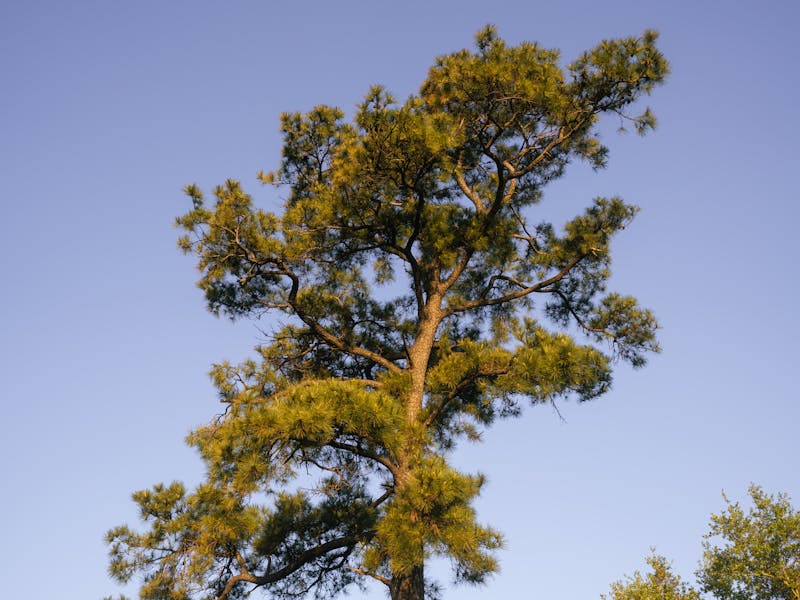
Quick Facts: Loblolly Pine
Pinus taeda
60-90 ft
Very fast
Full sun
Adaptable; acidic, sandy to clay, moist to moderately dry
USDA Zones 6-9
Georgia's Most Common Pine
The Loblolly Pine (Pinus taeda) is the most abundant tree species in Georgia, and it blankets huge stretches of Atlanta's urban and suburban forest. This fast-growing native pine shoots up to 60 to 90 feet tall with a straight trunk and a loose, oval crown. Loblolly pines are so familiar around Atlanta that most homeowners barely notice them, yet they deliver real benefits: shade, wildlife habitat, and erosion control on Atlanta's rolling terrain.
That said, loblolly pines hand Atlanta homeowners some serious headaches too. Height, shallow roots, and brittle wood make them storm magnets. Large loblolly pines standing near houses are a frequent source of property damage during Atlanta's harsh thunderstorms and the occasional ice event. Knowing how to manage these trees matters for both safety and your wallet.
Identifying a Loblolly Pine
Loblolly pines carry needles in bundles of three, each needle 6 to 9 inches long, yellowish-green and slightly twisted. Bark on young trees is thin and flaky. On mature trunks it thickens into reddish-brown, deeply furrowed plates with flat tops -- a rugged, plated look. Cones measure 3 to 6 inches long, reddish-brown, and each scale tip ends in a short, sharp spine.
The silhouette is a tall, straight trunk topped by an irregular, open crown. Lower limbs shed naturally over time, leaving a high canopy. In crowded stands, trunks grow remarkably straight and pole-like.
Growing Conditions in Atlanta
Loblolly pines handle just about anything Atlanta throws at them. They thrive in the acidic, clay-based soils of the Piedmont region and shrug off both wet and moderately dry spells. Full sun is a must, and they do best with enough elbow room and decent air circulation.
Growth is fast -- often 2 to 3 feet of height per year. That speed delivers quick shade and screening, but it also means softer wood than hardwoods or slower-growing pines produce.
Common Problems and Diseases
Southern Pine Beetle (SPB) is the most destructive insect pest of pines in the southeastern United States. These tiny bark beetles tunnel into the trunk and carry blue-stain fungi that choke off water transport, killing trees inside of weeks. Look for pitch tubes on the bark, reddish-brown boring dust, and needles browning fast. Outbreaks rip through neighborhoods. Keeping trees vigorous with proper spacing and low stress is the strongest defense. Infested trees should come down quickly to stop the spread.
Pine Wilt, caused by the pinewood nematode, can drop a loblolly pine in a hurry. Needles brown uniformly, and the tree dies within weeks to months. Pine sawyer beetles spread the nematode. There's no cure; infected trees need to be removed and destroyed before neighboring pines catch it.
Ice Storm Damage is a major worry for loblolly pines in Atlanta. Ice loading on needles and branches snaps limbs and tops, creating dangerous situations. The tall, narrow profile of loblolly pines makes them especially vulnerable to ice. After any ice storm, get your pines professionally checked for structural soundness. Emergency tree services are available 24/7 for storm-damaged trees.
Care and Maintenance
Loblolly pines don't ask for much day-to-day. Skip fertilizer unless soil tests flag a deficiency. Keep at least 20 to 30 feet between pines to ease competition stress and beetle pressure. Pull dead or declining trees promptly. And never top one -- they won't rebuild a proper crown.
When to Call an Arborist
Call an ISA-certified arborist right away if you spot boring dust on the bark, pitch tubes, fast browning, or storm damage. Beetle infestations move quickly and can jump to neighboring trees within days. Our team at EastLake Tree provides rapid risk assessment and removal services for hazardous pines.
Atlanta-Specific Tips
Got a cluster of loblolly pines on your Atlanta property? Think about thinning the stand to cut competition and boost individual tree health. Crowded pines fall harder to beetle attacks and storm damage. Before storm season, have large pines near structures evaluated for risk. Proactive removal of pines that lean toward homes or show signs of decline is often the smarter call. If you're planting fresh, longleaf pine is a tougher, longer-lived native alternative worth considering.