Quick Facts: Eastern Red Cedar
Juniperus virginiana
30-50 ft
Slow to medium
Full sun
Extremely adaptable; tolerates poor, dry, rocky, and clay soils
USDA Zones 2-9
A Tough Native Conifer for Atlanta
The Eastern Red Cedar (Juniperus virginiana) is one of the most adaptable native conifers growing throughout the Atlanta area. Technically a juniper rather than a true cedar, this evergreen shrugs off conditions that would stress or kill many other trees. It colonizes abandoned fields, highway medians, and rocky outcrops across Georgia, which tells you everything about its grit. In planned landscapes, eastern red cedar delivers year-round green color, wildlife habitat, and solid wind screening.
Reaching 30 to 50 feet tall with a dense, columnar to pyramidal form, eastern red cedar suits Atlanta homeowners who want a low-maintenance, native evergreen that mostly takes care of itself. It handles drought, heat, poor soil, and urban pollution without flinching. It'll never match the Leyland cypress for speed, but it outlasts that species by decades and sidesteps the disease problems that cut so many Leylands short.
Identifying an Eastern Red Cedar
Eastern red cedars carry two types of foliage: juvenile leaves are sharp, awl-shaped needles, while mature foliage consists of tiny, overlapping scales pressed flat against the twigs. Most trees show both. The color runs dark green to blue-green in summer, sometimes picking up a bronze or purplish tinge in winter. Male trees produce small, yellowish pollen cones at branch tips in early spring that release clouds of allergenic pollen. Female trees bear small, round, blue-gray berry-like cones about a quarter-inch across that are actually modified cones.
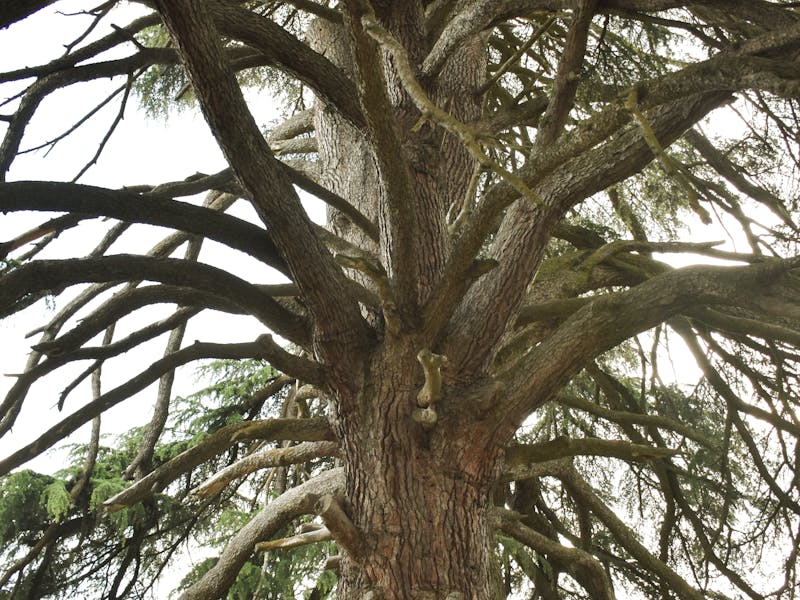
The bark is reddish-brown, thin, and peels in long, fibrous strips. The aromatic heartwood is the familiar red "cedar" wood used in closets and chests. Overall form varies from tightly columnar to broadly pyramidal depending on genetics and growing conditions.
Growing Conditions in Atlanta
Eastern red cedar is wildly adaptable to Atlanta's growing conditions. Clay, sand, rock, acidic or alkaline ground, it pushes through all of it. Full sun produces the densest, best-looking form, but it tolerates light shade. Once established, it's one of the most drought-proof trees we work with around Atlanta, rarely needing supplemental watering even during the driest summers.
Soggy ground is the one deal-breaker. Skip low spots where water pools. Good air circulation also helps ward off fungal issues.
Common Problems and Diseases
Cedar Apple Rust is the most talked-about disease tied to eastern red cedar. This fungus bounces between two hosts: a juniper species (like eastern red cedar) and an apple or crabapple tree. On the cedar side, it spawns golf-ball-sized, reddish-brown galls that sprout gelatinous orange tentacles during spring rains. Weird-looking? Absolutely. But the galls rarely cause significant harm to the cedar. The real damage lands on nearby apple trees, so if you grow apples, keep some distance between them and your red cedars.
Bagworms are the other threat worth watching. Left unchecked, they can strip an eastern red cedar bare and kill it. Their camouflaged bags dangle from branches and blend in so well that many homeowners miss them until the damage is severe. Hand-pick bags over winter and hit young caterpillars with Bt-based sprays in late May while they're still feeding actively. A plant health care program lets us fold bagworm monitoring right into your regular schedule.
Care and Maintenance
Eastern red cedar is one of the lowest-maintenance trees you can plant in an Atlanta landscape. Once established, it seldom needs supplemental watering or fertilization. Pruning is optional and should stay minimal. If you want to shape it, do so lightly in late spring, but don't cut into bare brown wood because it won't sprout back. Clear dead lower branches for looks and access. That's about it.
When to Call an Arborist
Reach out to an ISA-certified arborist if you spot widespread browning, a heavy bagworm invasion, or large galls that have you worried. Eastern red cedars rarely give us trouble, but when something does pop up a professional eye can pinpoint the issue and lay out the right treatment quickly.
Atlanta-Specific Tips
Got a tough spot in your yard? Dry slope, rocky patch, thin soil sitting on red clay hardpan? That's exactly where eastern red cedar earns its keep around Atlanta. It shelters wildlife through winter and feeds cedar waxwings, which is a nice bonus. If pollen allergies are a concern, plant female cultivars that don't produce pollen. For Atlanta landscapes, 'Taylor' (narrow columnar form) and 'Brodie' (dense pyramidal form) are the two cultivars our team recommends most often.