Quick Facts: Sassafras
Sassafras albidum
30-60 ft
Moderate to fast
Full sun to partial shade
Well-drained, slightly acidic; tolerates sandy or loamy
USDA Zones 4-9
Why Sassafras Is a Treasured Atlanta Native
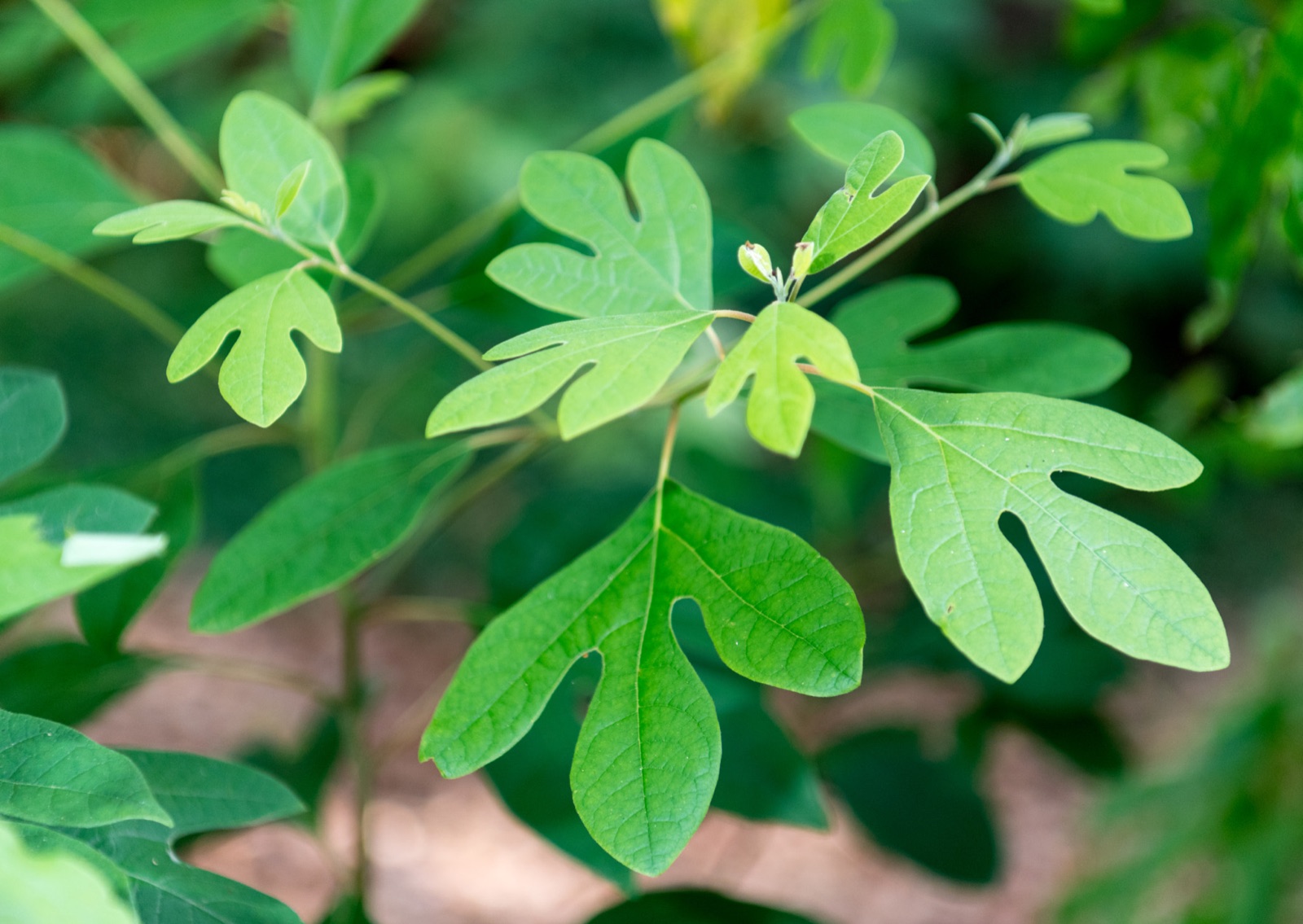
Sassafras (Sassafras albidum) is one of Georgia's most distinctive and historically significant native trees. Found growing wild throughout the Atlanta metro area in forest edges, old fields, and along roadways, Sassafras has been part of the southeastern landscape since long before European settlement. The tree is famous for its aromatic roots, bark, and leaves, and for the unique feature of producing three different leaf shapes on the same tree: a simple oval, a two-lobed mitten shape, and a three-lobed trident form.
In Atlanta's USDA zones 7b-8a, Sassafras grows vigorously and can reach 30 to 60 feet tall, though specimens in open landscapes are often shorter and more spreading. The fall color is among the best of any Georgia native, producing a brilliant display of orange, scarlet, and red-purple that rivals any New England maple. Sassafras deserves wider use in Atlanta landscapes as a specimen or naturalized planting.
Identifying Sassafras
Sassafras is easily identified by its three distinctive leaf shapes, all of which may appear on the same branch. The leaves are bright green, 3 to 7 inches long, and aromatic when crushed, releasing a spicy, root-beer-like scent. The bark on young trees is smooth and green-brown, becoming deeply furrowed and reddish-brown with age. Small yellow-green flowers appear in spring before the leaves emerge, and female trees produce dark blue berries on bright red stalks that are eagerly consumed by birds.
Sassafras develops a deep taproot, making it highly stable but difficult to transplant once established. The tree also spreads aggressively by root suckers, which can create extensive colonies if not managed. This suckering habit makes sassafras excellent for naturalizing but potentially problematic in formal landscapes.
Planting and Care in Georgia
Plant Sassafras in well-drained, slightly acidic soil in full sun for best growth and fall color. The tree tolerates Atlanta's clay soils better than many species but does not tolerate waterlogged conditions. In heavy clay, ensure adequate drainage by planting on a slight mound and amending with organic matter. Sassafras prefers a slightly acidic pH, which aligns with most of Atlanta's native soil profile.
Pruning needs are moderate. Develop a strong central leader when young and remove root suckers regularly to maintain a single-trunk tree form. The wood can be somewhat brittle, so reduce long lateral branches to minimize storm damage during Atlanta's summer thunderstorms. Avoid heavy pruning, which stimulates excessive suckering from the roots.
Common Problems in Georgia
Laurel Wilt is the most critical threat to Sassafras in Georgia. This lethal vascular disease, caused by the fungus Raffaelea lauricola and spread by the redbay ambrosia beetle (Xyleborus glabratus), has been confirmed in Georgia and is spreading through the state. Laurel wilt has already devastated redbay (Persea borbonia) populations across the southeastern coastal plain and now threatens sassafras, which belongs to the same plant family (Lauraceae). Symptoms include rapid wilting and browning of the canopy, often starting on one side of the tree. Infected wood shows dark staining in the sapwood. There is no cure; early detection and removal of infected trees may slow spread.
Root Rot can develop in poorly drained Atlanta clay soils, particularly in low-lying areas or over-irrigated landscapes. Symptoms include yellowing foliage, canopy thinning, and eventual decline. Proper drainage at planting time is the best prevention.
Borers may attack stressed trees. The redbay ambrosia beetle is the primary concern due to its role in transmitting laurel wilt. Monitor for small bore holes and sawdust-like frass on the trunk.
When to Call an Arborist
Contact an ISA-certified arborist immediately if you notice rapid wilting or browning of your Sassafras canopy, which may indicate laurel wilt disease. Early detection is critical for managing the spread of this devastating disease. Also seek professional help for structural concerns, extensive root suckering, or storm damage. EastLake Tree Services offers plant health care programs that include monitoring for laurel wilt and other emerging threats to Atlanta's native trees.