Quick Facts: River Birch
Betula nigra
40-70 ft
Fast
Full sun to partial shade
Moist, acidic; thrives in wet clay soils
USDA Zones 4-9
Thrives in Atlanta's Wet Clay Soils
The River Birch (Betula nigra) is one of the best-adapted native trees for the challenging growing conditions found across metro Atlanta. While many trees struggle in Atlanta's heavy, wet clay soils, river birch actually thrives in these conditions. This fast-growing tree reaches 40 to 70 feet tall and is widely planted for its attractive exfoliating bark, graceful form, and tolerance of poorly drained sites.
River birch is the only birch species that performs well in the humid, hot Southeast. Unlike white birch, which cannot tolerate Atlanta's heat, river birch is perfectly suited to zones 7b-8a. The cultivar 'Heritage' (also sold as 'Cully') is the most popular variety in Atlanta, offering superior bark exfoliation and heat tolerance. Multi-trunk specimens are particularly popular, providing year-round visual interest from their peeling, salmon-to-cream bark.
Identifying a River Birch
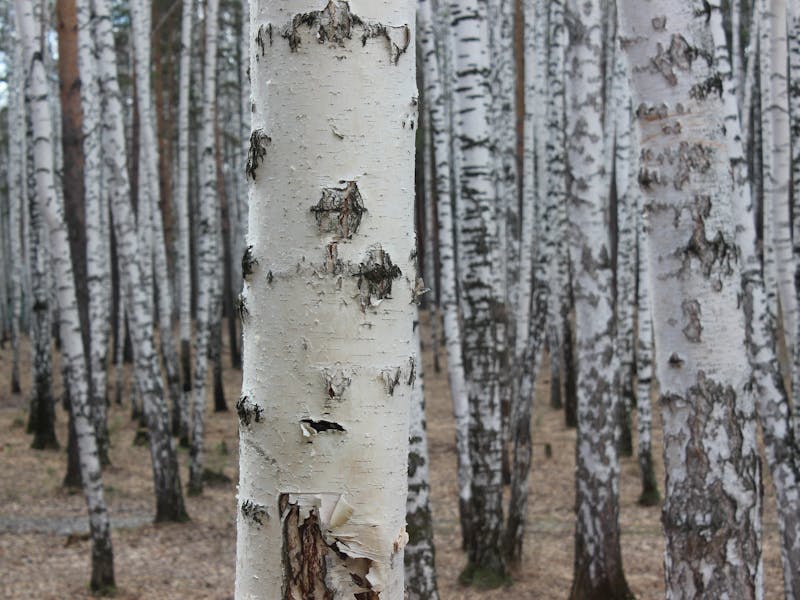
The most striking feature is the bark, which peels and curls in papery sheets, revealing layers of salmon, tan, cream, and reddish-brown. The exfoliation is most dramatic on young to middle-aged trees and on the cultivar 'Heritage.' Leaves are alternate, doubly serrated, roughly diamond-shaped, 2 to 3 inches long, dark green above and pale below. Fall color is a soft yellow.
River birch has a pyramidal to oval form when young, becoming more rounded with age. Multi-trunk specimens are commonly sold and create attractive groupings. The catkins (flowers) appear in spring and produce small, winged seeds.
Growing Conditions in Atlanta
River birch prefers moist to wet, acidic soils with a pH below 6.5. It is one of the few shade trees that actually prefers the conditions many Atlanta homeowners complain about: wet, heavy clay. Plant in areas with consistent moisture, including low spots, near downspout drainage, or along water features. River birch does not tolerate alkaline conditions and will develop severe chlorosis if soil pH rises above 6.5.
Full sun produces the best growth and bark development. These trees can tolerate partial shade but may become less vigorous. They are not drought-tolerant and will drop interior leaves during dry periods if not watered.
Common Problems and Diseases
Birch Leafminer is a common pest that creates brown, blister-like mines within leaves. While the damage is cosmetic and not seriously harmful to healthy trees, heavy infestations can cause early leaf drop and weaken the tree over time. Systemic insecticides applied in early spring through a plant health care program are effective preventive treatments.
Aphids can colonize river birch in large numbers, producing honeydew and sooty mold. The honeydew drips onto surfaces below, creating a sticky mess. Natural predators usually control aphid populations, but severe infestations may warrant treatment.
Iron Chlorosis occurs when river birch is planted in alkaline soils. Leaves turn yellow between the veins while veins remain green. This is particularly common near new construction in Atlanta where concrete wash or limestone fill has raised soil pH. Acidifying fertilizers and chelated iron treatments can correct this issue, but the long-term solution is maintaining acidic soil conditions.
Care and Maintenance
Water consistently, especially during summer dry spells. River birch is a water-loving tree and will show stress quickly during drought. Maintain a 3 to 4 inch mulch layer to conserve moisture and maintain soil acidity. Fertilize with an acidic fertilizer in spring if soil pH testing indicates the need.
Prune in late summer or early fall to avoid heavy sap bleeding. Remove lower branches for clearance and to expose the attractive bark. Thin crossing branches and maintain structure. Do not prune in spring when sap flow is heaviest, as birch will bleed profusely from pruning cuts.
When to Call an Arborist
Contact an ISA-certified arborist if you notice widespread yellowing (chlorosis), heavy leafminer damage, or significant branch dieback. Our team at EastLake Tree Services can diagnose and treat river birch problems effectively, helping maintain these beautiful trees in optimal health.
Atlanta-Specific Tips
River birch is an excellent choice for wet areas of Atlanta yards where other trees fail. They work well near rain gardens, retention areas, and along creek banks. When planting in Atlanta, always test soil pH first. If pH is above 6.5, amend with sulfur and use acidic mulch materials like pine straw. The 'Heritage' cultivar is the recommended choice for Atlanta landscapes due to its superior heat tolerance, pest resistance, and bark display. Plant multi-trunk specimens for the most dramatic bark effect.