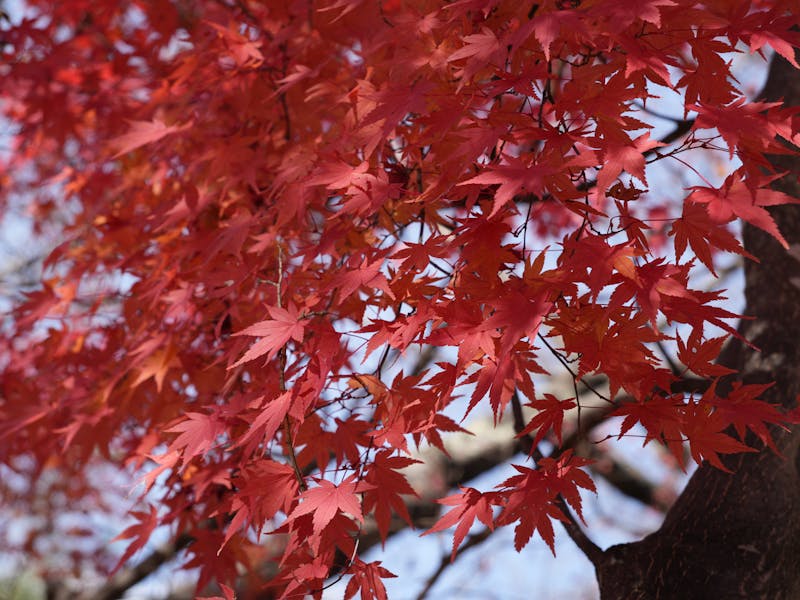
Quick Facts: Japanese Maple
Acer palmatum
15-25 ft
Slow
Partial shade; morning sun with afternoon shade ideal
Moist, well-drained, slightly acidic, rich in organic matter
USDA Zones 5-8
Atlanta's Premier Landscaping Tree
The Japanese Maple (Acer palmatum) is one of the most prized ornamental trees in Atlanta landscapes, and it's easy to see why. Hundreds of cultivars span a staggering range of leaf shapes, colors, and growth habits. Compact weeping forms tuck into tight corners; upright varieties climb to 25 feet and hold their own as shade trees. There's a Japanese maple for nearly every Atlanta landscape situation, which is why we spot them in yards all over the city.
These trees do well in Atlanta's climate when sited and tended correctly. The key detail: Japanese maples evolved as understory species in Japanese forests, so they crave dappled shade and shelter from fierce afternoon sun. Nail the placement, pair it with attentive care from an ISA-certified arborist, and a Japanese maple can anchor an Atlanta garden for decades.
Identifying a Japanese Maple
Japanese maples vary wildly, but most share a few telltale traits. Leaves are palmate, typically with 5 to 9 pointed lobes, though dissection ranges from shallow to extreme. Full-moon types carry broad, gently lobed leaves, while laceleaf (dissectum) types sport deeply divided, almost fern-like foliage. Color runs from cool green to deep burgundy, and many cultivars shift hues through the seasons.
Bark is smooth and gray-green, roughening a bit with age. What really sets these trees apart is the branching: sculptural, almost deliberate, with fine twigs sketching an intricate winter silhouette against the sky. Fall color tends to be breathtaking, spanning bright orange and scarlet to deep crimson.
Growing Conditions in Atlanta
The ideal spot for a Japanese maple in Atlanta catches morning sun and ducks into afternoon shade, well away from hot western and southern exposures. East-facing locations work beautifully, as do positions beneath the filtered canopy of larger deciduous trees. Full, all-day sun during Atlanta's summers hammers Japanese maples with leaf scorch and chronic stress. Don't do it.
Soil should be moist, well-drained, and loaded with organic matter at a slightly acidic pH (5.5-6.5). In Atlanta's clay, work compost generously into the planting area and pile on the mulch. Shallow-rooted by nature, these trees demand steady moisture. A 3 to 4 inch layer of mulch (pulled back from the trunk) is non-negotiable for holding moisture and shielding roots from temperature swings.
Common Problems and Diseases
Leaf Scorch tops the complaint list for Japanese maples in Atlanta, and it's not close. Leaf margins and tips go brown and papery, especially on red-leafed and laceleaf varieties. The culprit is a mix of heat stress, wind exposure, skimpy moisture, and too much direct sun. Smart siting, steady watering, and mulching head it off. Afternoon shade protection matters most during July and August.
Verticillium Wilt is a serious fungal disease capable of killing Japanese maples outright. The soil-borne fungus plugs water-conducting vessels, triggering wilting and branch dieback, usually on one side first. Slice into an affected branch and you'll often find dark streaking in the sapwood. No cure exists, but keeping tree vigor high through proper plant health care can slow the disease's march. Never plant Japanese maples where other verticillium-susceptible plants have already died.
Scale Insects, including cottony maple scale and Japanese maple scale, clamp onto branches and gradually drag the tree into decline. Heavy infestations ooze honeydew and breed sooty mold. Horticultural oil sprays applied during dormancy knock them back effectively.
Care and Maintenance
Japanese maples reward careful, artistic pruning that showcases their natural form. Time your cuts for late winter or early summer, targeting crossing branches, dead wood, and any growth that clutters the tree's graceful architecture. Never top or shear a Japanese maple. You're aiming to reveal the branching pattern, not wrestle it into a shape.
Feed sparingly in early spring with an acidic, slow-release fertilizer, and skip heavy nitrogen doses. Water deeply and regularly through dry stretches, particularly in summer. Young trees also need a watchful eye during late spring frosts that can scorch emerging foliage.
When to Call an Arborist
Reach out to an ISA-certified arborist if you notice one-sided wilting, creeping dieback, scale infestations, or if your Japanese maple needs skilled pruning to recover its form. Our team at EastLake Tree Services has years of hands-on experience with fine ornamental tree care and can give your Japanese maple the focused attention it needs.
Atlanta-Specific Tips
For Atlanta, pick varieties proven to handle the heat. Green-leafed types generally shrug off more sun than red-leafed or laceleaf cultivars. 'Bloodgood,' 'Emperor I,' and 'Oshio Beni' are dependable upright red varieties for Atlanta. Among laceleaf types, 'Crimson Queen' and 'Viridis' (green) hold up well given afternoon shade. When Atlanta's periodic summer droughts hit, Japanese maples should be the first trees in your yard to get supplemental water. Container-grown Japanese maples are popular on Atlanta patios and decks too, but plan on watering them more often.