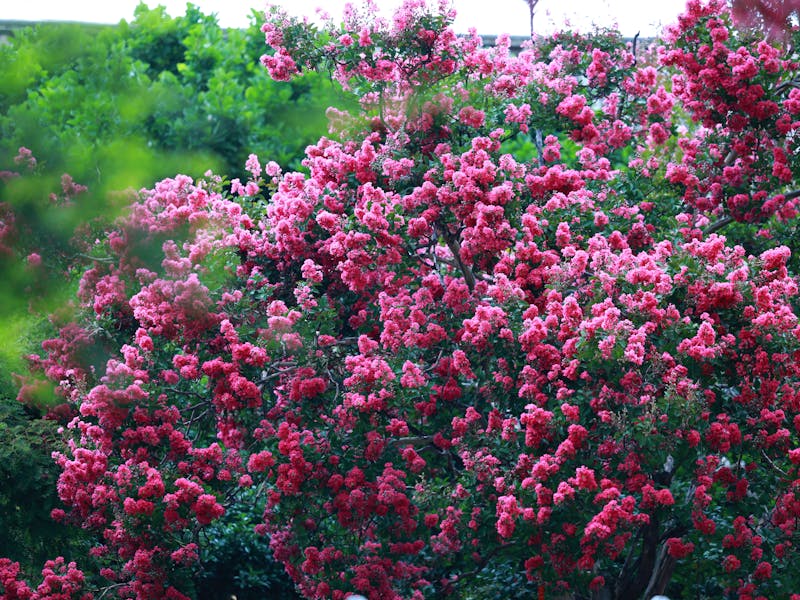
Quick Facts: Crepe Myrtle
Lagerstroemia indica
15-30 ft
Fast
Full sun
Well-drained; tolerates various soil types including clay
USDA Zones 6-9
Atlanta's Most Popular Flowering Tree
The Crepe Myrtle (Lagerstroemia indica) is hands-down the most widely planted flowering tree in metro Atlanta. From July through September, crepe myrtles erupt in blooms of white, pink, red, lavender, and purple, splashing color during the hottest months when few other trees bother flowering. That attractive exfoliating bark, compact size, and stubborn heat tolerance make them a natural fit for Atlanta's climate and landscape needs.
You can find crepe myrtles in sizes from dwarf varieties under 4 feet to large tree forms topping 30 feet. For Atlanta landscapes, tree-form picks like Natchez (white), Tuscarora (coral pink), Muskogee (lavender), and Dynamite (red) bring reliable summer color, handsome bark, and welcome shade all in one package. With attentive care from an ISA-certified arborist, a well-placed crepe myrtle can anchor a yard for decades across Atlanta's urban and suburban neighborhoods.
Identifying a Crepe Myrtle
You'll spot a crepe myrtle first by its bark. Smooth and exfoliating, it peels in patches to reveal shades of pink, gray, tan, and cinnamon underneath. Gorgeous year-round. The leaves are small, opposite or sub-opposite, oval, 1 to 3 inches long, pushing out with a bronze or reddish tinge before settling into dark green. Fall color swings from yellow and orange to bright red, depending on the variety.
Flowers arrive in large panicles at the ends of new growth from midsummer through fall. Each blossom has crinkled, crepe-paper-like petals, which gives the tree its common name. Clusters stretch 6 to 18 inches long, putting on a show that stops you mid-walk. After flowering, persistent brown seed capsules cling to branches through winter.
Growing Conditions in Atlanta
Crepe myrtles feed off Atlanta's hot summers and handle the region's clay soils better than most ornamental trees. They demand full sun for heavy flowering; trees in partial shade bloom sparsely and pick up powdery mildew more easily. They prefer well-drained soil but adapt to a wide range of soil types scattered across metro Atlanta.
Once their roots grab hold, crepe myrtles shrug off drought well enough to qualify as genuinely low-maintenance landscape trees for Atlanta. New plantings are another story. Water them steadily for the first two growing seasons so the root system gets a firm grip before you back off.
Common Problems and Diseases
Crepe Myrtle Bark Scale (CMBS) is the most alarming pest threat to crepe myrtles in Atlanta right now. This invasive insect, first detected in the Southeast around 2014, has spread fast across Georgia. CMBS shows up as white, felt-like patches on bark, particularly in branch crotches. Heavy infestations pump out honeydew that feeds thick black sooty mold on bark, leaves, and anything beneath the tree. A targeted plant health care program including systemic insecticide treatments remains the most effective control strategy.
Powdery Mildew is a fungal disease that coats leaves, buds, and young shoots in a white, powdery film. It flares during stretches of high humidity with warm days and cool nights. Planting mildew-resistant varieties and keeping good air circulation are the best prevention strategies.
Sooty Mold rides in on honeydew from aphids, bark scale, or other sap-sucking insects. The black, sooty coating on leaves and bark looks bad but won't directly harm the tree. Fix the bug problem and the mold disappears on its own.
Improper Pruning ("Crepe Murder") might be the single most preventable disaster hitting crepe myrtles in Atlanta. Every winter, countless crepe myrtles get topped by cutting all branches back to stubs. This severe heading triggers a flush of weak, whip-like sprouts, wrecks the tree's natural form, and leaves permanent scars. Proper crepe myrtle pruning means selective thinning of small branches and seed heads. Not topping.
Care and Maintenance
Good pruning is everything with crepe myrtles. In late winter, clip out suckers from the base, thin twiggy interior growth, cut crossing branches, and snip off old seed heads. Open up lower limbs to show off the bark on multi-stemmed specimens. Never top a crepe myrtle. If yours has outgrown its space, the honest fix is replacing it with a more appropriately sized variety.
Feed in early spring with a balanced, slow-release fertilizer. Spread 2 to 3 inches of mulch around the root zone. Keep an eye out for bark scale from spring through fall. Catching an infestation early matters because this pest hitchhikes through whole neighborhoods once it gets a foothold.
When to Call an Arborist
Give an ISA-certified arborist a call if you notice white waxy deposits on bark, heavy sooty mold, significant dieback, or if your crepe myrtle has been improperly topped and needs corrective pruning. Our team at EastLake Tree Services specializes in proper crepe myrtle care and can help restore trees that have been mangled by bad cuts.
Atlanta-Specific Tips
Go with mildew-resistant and bark scale-resistant varieties whenever you're adding a new crepe myrtle in Atlanta. The newer hybrids bred at the National Arboretum generally hold up best against disease. Pick the sunniest spot you can find to maximize blooms and discourage fungal trouble. In Atlanta's clay soils, loosen and amend the planting hole for better drainage. And if you notice bark scale on your trees, don't wait. Contact an arborist right away because this pest jumps from yard to yard fast.