Quick Facts: American Yellowwood
Cladrastis kentukea
30-50 ft
Moderate
Full sun
Well-drained, adaptable to pH
USDA Zones 4-8
Why American Yellowwood Deserves a Spot in Atlanta Landscapes
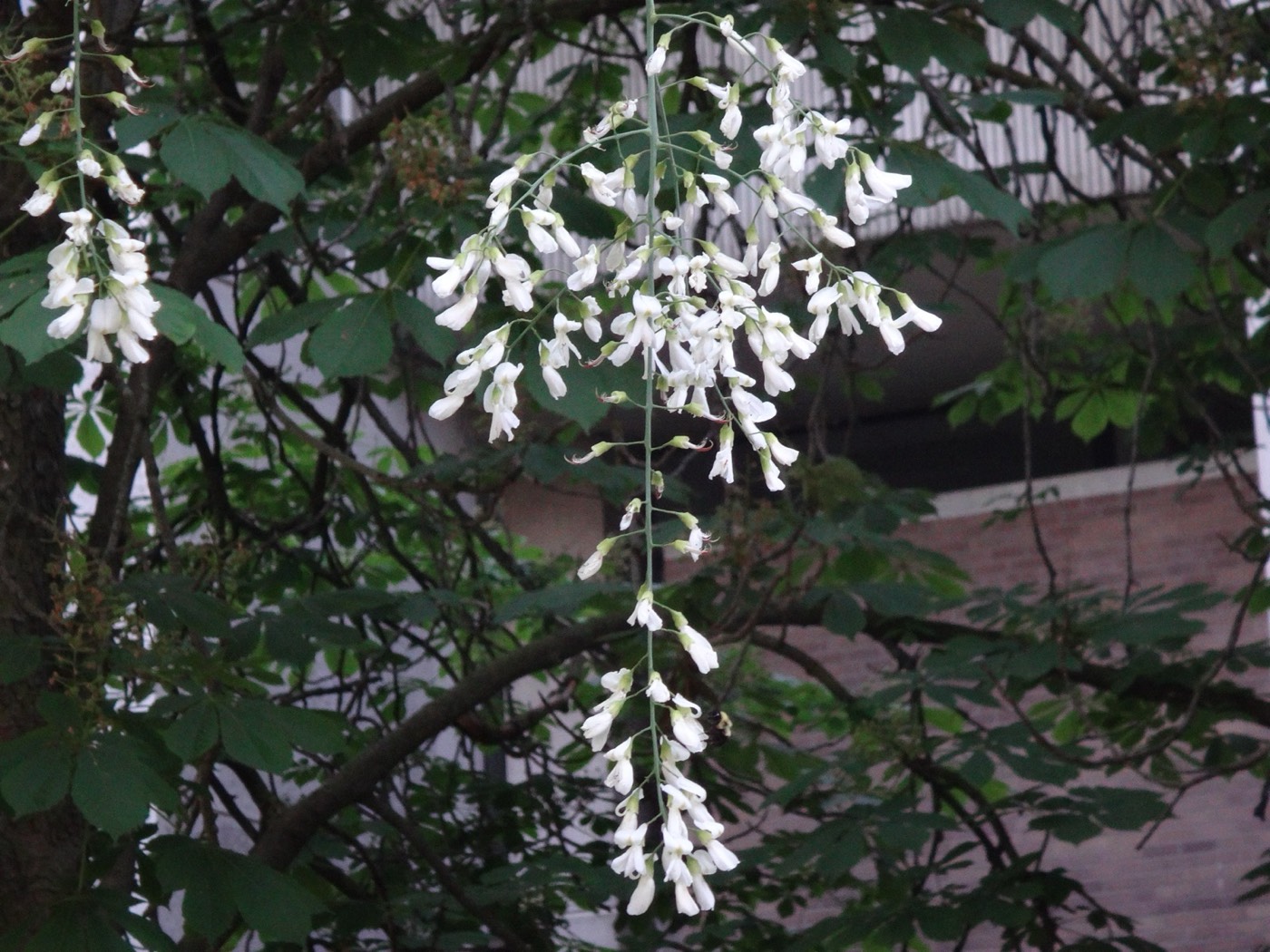
The American Yellowwood (Cladrastis kentukea) is one of the most underused native ornamental trees available to Atlanta homeowners. When in bloom, few trees can match its beauty: long, drooping clusters of fragrant white flowers, reminiscent of white wisteria, hang from the branches in late spring, creating a spectacular display that stops traffic. The smooth, beech-like gray bark is attractive year-round, and the compound leaves turn a warm yellow in fall. Despite these outstanding qualities, Yellowwood remains uncommon in Atlanta landscapes, making it a distinctive choice for homeowners who want something beyond the usual ornamental selections.
Growing 30 to 50 feet tall with a broad, rounded canopy, American Yellowwood is well-suited to Atlanta's USDA zones 7b-8a. The tree is native to a limited range in the southeastern United States, growing naturally on limestone bluffs and rich woodlands from Kentucky to North Carolina. It adapts well to cultivation and performs admirably in Atlanta's urban heat and varied soil conditions.
Identifying American Yellowwood
American Yellowwood is identified by its smooth, gray bark that resembles American Beech, its compound leaves with 7 to 11 alternate leaflets, and its stunning flower panicles that can reach 8 to 14 inches long. The common name comes from the bright yellow color of the heartwood, which was historically used as a dye. The tree develops a graceful, vase-shaped to rounded canopy with low-branching limbs that create an inviting shade canopy.
One notable characteristic is alternate-year blooming. Yellowwood tends to flower heavily one year and lightly the next, with the best floral displays occurring in years following good growing conditions. Atlanta gardeners should expect this pattern rather than anticipating uniform blooms each season.
Planting and Care in Georgia
American Yellowwood is adaptable to a range of soil types and pH levels, making it well-suited to Atlanta's diverse soil conditions, from acidic Piedmont clay to the more alkaline soils found in some developed areas. Plant in full sun for best flowering. The tree tolerates partial shade but produces fewer flowers. In heavy clay, amend with compost and ensure good drainage. Water deeply during establishment and during extended summer droughts.
Structural pruning is the single most important maintenance task for American Yellowwood. The species is prone to developing weak, V-shaped crotches with included bark, particularly at major branch unions. These weak unions are susceptible to failure during storms, which can devastate the tree's form. Begin corrective pruning when the tree is young, selecting well-spaced branches with wide attachment angles and removing competing co-dominant stems. Prune in summer, as Yellowwood bleeds heavily from winter pruning wounds due to strong root pressure.
Common Problems in Georgia
Verticillium Wilt is the primary disease concern for American Yellowwood. This soil-borne fungus invades through the roots and blocks the vascular system, causing wilting and dieback of individual branches or entire sections of the canopy. Avoid planting in soil where tomatoes, peppers, eggplant, or other verticillium-susceptible plants have shown wilt symptoms. There is no chemical cure; maintain tree health through proper plant health care and watering.
Weak Branch Unions are the most common structural issue. Included bark at co-dominant stems creates failure points that can split the tree during Atlanta's summer thunderstorms and winter ice events. Early structural pruning is the only effective prevention.
Borers may attack stressed trees, particularly those with pruning wounds or storm damage. Avoid creating large wounds during the growing season and maintain tree vigor through proper watering and mulching.
When to Call an Arborist
Contact an ISA-certified arborist for structural assessment if your Yellowwood has developed co-dominant stems or V-shaped crotches, especially on mature trees where cabling or bracing may be needed. Also seek professional help for suspected verticillium wilt, significant storm damage, or general decline. EastLake Tree Services specializes in structural pruning and plant health care for Atlanta's ornamental trees, helping Yellowwoods develop strong structure for long-term health.