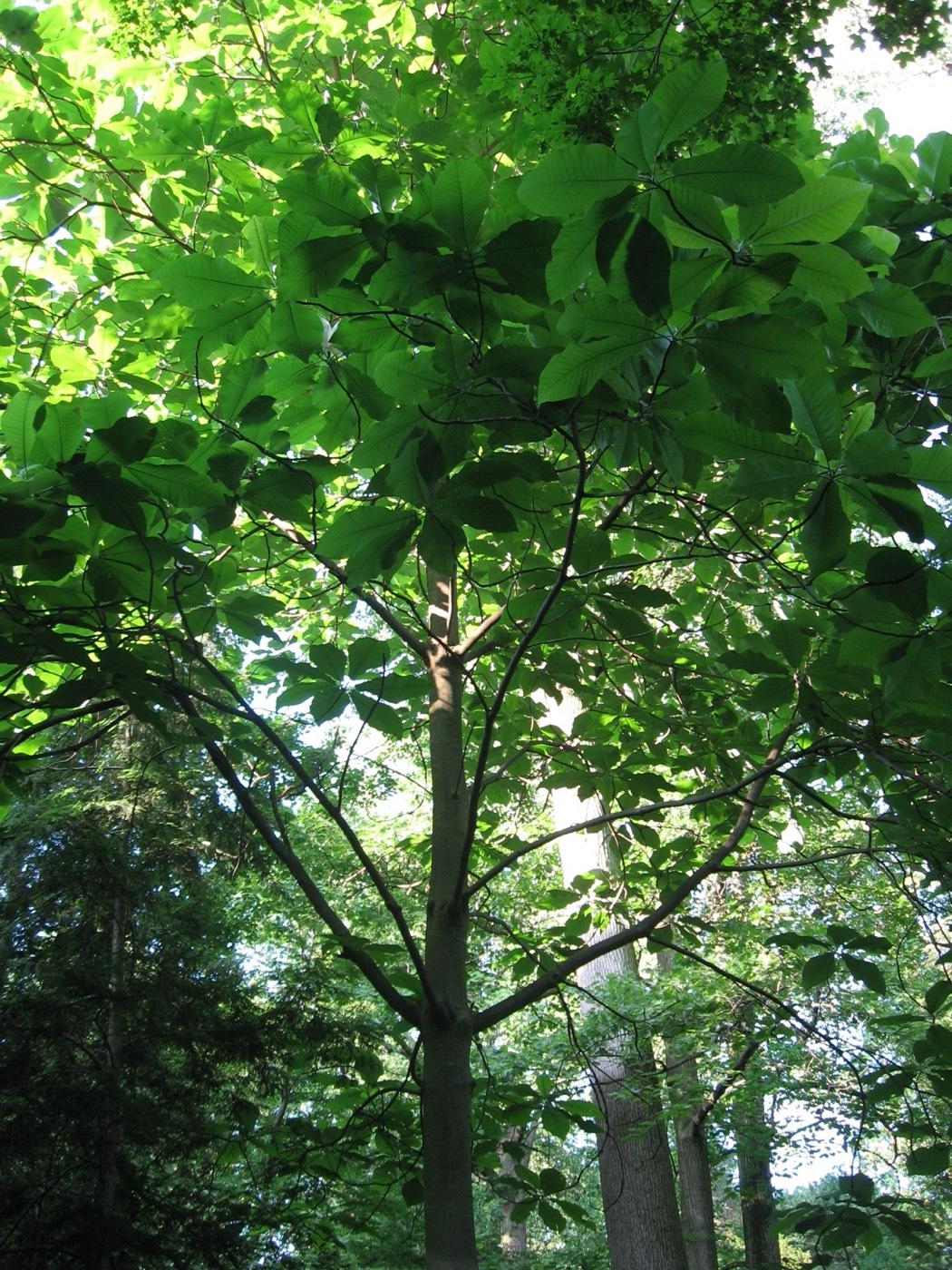
Quick Facts: Bigleaf Magnolia
Magnolia macrophylla
30-50 ft
Moderate
Partial shade
Rich, moist, well-drained
USDA Zones 5-8
Why Bigleaf Magnolia Thrives in Atlanta
The Bigleaf Magnolia (Magnolia macrophylla) is one of the most remarkable native trees found in the Atlanta region, producing the largest simple leaves of any tree in North America. Individual leaves can reach an astonishing 30 inches in length and 12 inches in width, creating a bold, tropical appearance that is unlike anything else in the southeastern landscape. This deciduous magnolia grows 30 to 50 feet tall and is native to the rich, sheltered coves and ravines of the southern Appalachians, including scattered populations in north Georgia.
In Atlanta's USDA zones 7b-8a, Bigleaf Magnolia performs well when given the right conditions. The enormous fragrant white flowers, up to 12 inches across with a purple blotch at the base, appear in late May to June and are among the largest of any native tree. The combination of massive leaves, spectacular flowers, and unique character makes Bigleaf Magnolia a dramatic focal point in any Atlanta garden.
Care Tips for Atlanta Bigleaf Magnolias
The most critical factor for success with Bigleaf Magnolia in Atlanta is wind protection. The enormous leaves are easily tattered and shredded by wind, so planting in a sheltered location is essential. Ideal sites include courtyards, the lee side of buildings, or within a protected woodland garden. Avoid open, exposed locations where Atlanta's frequent thunderstorm winds will damage the foliage.
Bigleaf Magnolia prefers partial shade and rich, moist, well-drained soil. In Atlanta's clay-heavy soils, amend the planting area generously with compost and organic matter to improve drainage and fertility. This species does not tolerate compacted or waterlogged soils. Mulch heavily with organic material to maintain consistent soil moisture and the cool root conditions this tree requires.
Structural pruning is important, especially for young trees. Bigleaf Magnolia can develop weak branch unions and co-dominant leaders. Establish a single central leader early and remove competing stems. The large leaves create significant wind resistance, so a strong branch structure is essential to prevent storm damage.
Common Problems in Georgia
Storm Damage is the primary concern for Bigleaf Magnolia in Atlanta. The enormous leaves act like sails in high winds, placing tremendous stress on branches and the trunk. Atlanta's severe thunderstorms and occasional ice storms can cause significant breakage. Proper structural pruning and a sheltered planting location are the best defenses.
Verticillium Wilt can affect Bigleaf Magnolia, causing wilting and dieback of individual branches or entire sections of the canopy. Infected wood shows dark streaking in the sapwood. There is no chemical cure; remove infected branches promptly and maintain tree vigor through proper care.
Scale Insects, particularly magnolia scale, can infest this species. Heavy infestations cause branch dieback and produce honeydew that supports sooty mold growth. Dormant oil applications in late winter help control overwintering populations.
Leaf Spot diseases are generally cosmetic and more noticeable on Bigleaf Magnolia simply because the leaves are so large. Fungal spots during wet weather rarely require treatment but can be unsightly on the dramatic foliage.
When to Call an Arborist
Contact an ISA-certified arborist if you notice structural problems, storm damage, heavy scale infestations, or signs of verticillium wilt. A tree risk assessment is recommended after severe storms to evaluate branch integrity. Bigleaf Magnolia is a unique and valuable tree worth protecting. Our team at EastLake Tree Services provides plant health care and structural pruning for Atlanta's most distinctive native trees.