Quick Facts: Bald Cypress
Taxodium distichum
50-70 ft
Medium
Full sun
Moist to wet, acidic; tolerates flooding and clay
USDA Zones 4-10
Thrives in Atlanta's Wettest Areas
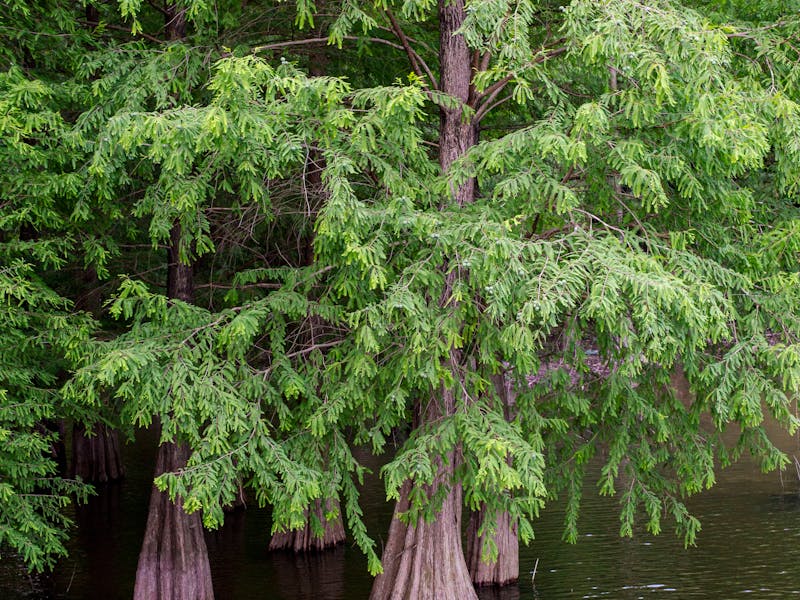
The Bald Cypress (Taxodium distichum) is a remarkable deciduous conifer native to the southeastern United States. Despite being a conifer, it drops its feathery needles each fall, hence the name "bald." In Atlanta, bald cypress excels in wet areas where most other trees fail, including near ponds, along creeks, in rain gardens, and in low-lying areas with heavy clay that stays saturated. It is one of the most flood-tolerant trees available for the Atlanta landscape.
Growing 50 to 70 feet tall with a pyramidal to oval crown, bald cypress is a stately tree that brings unique texture and character to the landscape. Its feathery, light green foliage turns a warm copper-orange in fall before dropping. The fluted, buttressed trunk base and potential for "knee" development add architectural interest. Bald cypress is remarkably long-lived, with some specimens surviving over 1,000 years, making it an excellent legacy tree for Atlanta properties.
Identifying a Bald Cypress
The foliage consists of flat, soft, needle-like leaves arranged alternately along deciduous branchlets. The needles are light green in spring and summer, turning russet to copper-bronze in fall before shedding. The bark is reddish-brown to gray, fibrous, and develops vertical strips and shallow furrows with age. The trunk base often develops a distinctive flared or buttressed shape.
In wet or flooded conditions, bald cypress may produce "knees," which are woody projections that grow upward from the root system. In typical Atlanta landscape conditions (moist but not flooded), knees rarely develop, which is actually preferable for most homeowners.
Growing Conditions in Atlanta
Bald cypress is incredibly adaptable. While it naturally grows in swamps and floodplains, it also performs surprisingly well in average, well-drained landscape conditions. In Atlanta, it excels in wet clay soils that challenge most other trees. Plant in full sun for best growth and form.
This tree handles a wider range of conditions than most people expect. Once established, bald cypress tolerates moderate drought, making it more versatile than its swamp origins suggest. However, it achieves its best growth with consistent moisture.
Common Problems and Diseases
Cypress Twig Gall Midge is the most common pest, creating small, rounded galls on twig tips. While these galls are cosmetically unappealing, they rarely cause significant harm to the overall health of the tree. Control is generally not necessary.
Spider Mites occasionally attack during hot, dry summer conditions. Symptoms include stippled, bronzed foliage and fine webbing. Maintain adequate moisture and apply miticides if populations become severe.
Generally pest-resistant: Bald cypress is one of the most trouble-free large trees available for Atlanta landscapes. It has very few serious pest or disease problems, which is one of its greatest strengths. This low-maintenance quality makes it an excellent choice for homeowners who want a large shade tree without significant ongoing care requirements.
Care and Maintenance
Bald cypress is remarkably low-maintenance once established. Water during the first 2 to 3 years to establish the root system. After establishment, supplemental water is beneficial during drought but not critical. Fertilize sparingly; these trees are not heavy feeders.
Pruning needs are minimal. Remove dead branches and any lower limbs needed for clearance. The deciduous needle drop in fall creates fine-textured litter that decomposes quickly, unlike the persistent leaves of magnolia or live oak.
When to Call an Arborist
Contact an ISA-certified arborist if you notice significant dieback, heavy mite infestations, or structural concerns. Bald cypress is generally so trouble-free that arborist calls are infrequent. Our team at EastLake Tree Services can provide assessment and plant health care for bald cypress when needed.
Atlanta-Specific Tips
Bald cypress is an underutilized tree in Atlanta landscapes that deserves wider planting. It is an excellent choice for rain gardens, stormwater management areas, and wet spots in the yard. Unlike many trees, it actually improves in wet clay conditions rather than struggling. For Atlanta homeowners with chronically wet areas, bald cypress and its close relative the pond cypress (Taxodium ascendens) offer reliable, low-maintenance solutions. The fall color display and feathery texture provide unique landscape interest that few other Atlanta trees can match. Plant where it has room to grow and avoid areas where the occasional development of knees (in wet conditions) could be a tripping hazard near walkways.