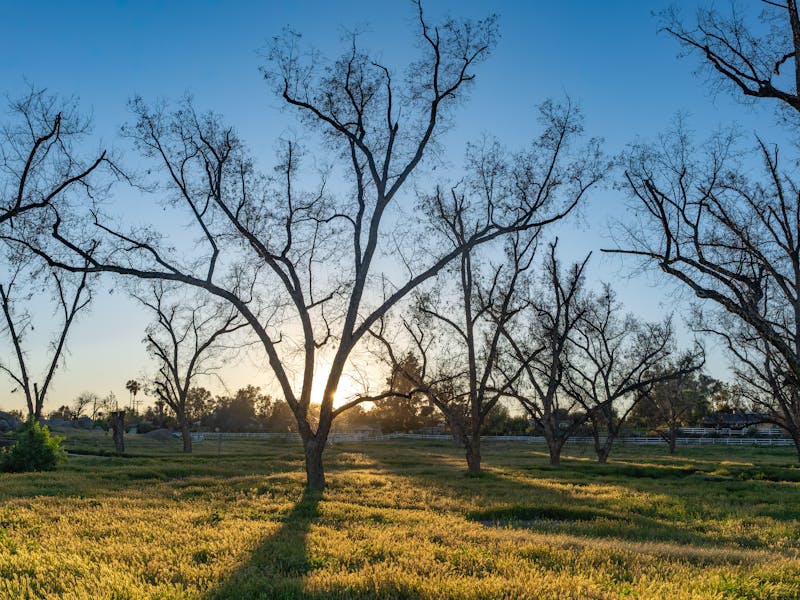
Quick Facts: Pecan
Carya illinoinensis
70-100 ft
Slow to medium
Full sun
Deep, well-drained, fertile; tolerates clay with drainage
USDA Zones 5-9
Georgia's State Tree Crop
The Pecan (Carya illinoinensis) is Georgia's official state tree, and pecans remain the state's top-producing tree nut crop. Across metro Atlanta, mature pecan trees anchor older neighborhoods and rural lots, their broad canopies throwing heavy shade and dropping a yearly harvest of rich nuts. These are some of the biggest trees you'll find in Atlanta's landscape, regularly topping 70 to 100 feet tall with an equal or wider spread at maturity.
Raising a productive pecan in an Atlanta yard takes steady commitment. Unlike forest trees that mostly look after themselves, pecans grown for nuts demand fertilization, pest management, and a proper plant health care routine to turn out quality harvests. Plenty of Atlanta homeowners keep pecans just for shade, though, and that calls for a lighter touch.
Identifying a Pecan
Pecan leaves are alternate, pinnately compound, 12 to 20 inches long, with 9 to 17 lance-shaped leaflets. Each leaflet curves slightly, dark green on top and paler underneath. Fall color is yellow but usually nothing to write home about. Bark runs gray to brownish-gray, scored with deep, narrow furrows and flat-topped ridges on older trunks.
The nuts themselves are oblong, 1 to 2 inches long, wrapped in a four-sectioned husk that cracks open when ripe in October and November. Grafted varieties yield bigger, thinner-shelled nuts than wild or seedling trees. Male flowers hang as slender, drooping catkins in spring; the tiny female flowers sit at branch tips.
Growing Conditions in Atlanta
Pecans need full sun, deep soil, and reliable drainage. They send down a sturdy taproot and spread an extensive root network, so they want uncompacted ground with room to stretch. In Atlanta's clay-heavy soils, pecans can still do well if you plant them in deeper pockets and stay on top of drainage and fertility.
For nut production, pecans must cross-pollinate with a different variety. Set at least two varieties within 150 feet of each other for dependable pollination. Allow 40 to 50 feet of clearance from buildings and other big trees -- mature pecans claim a lot of real estate.
Common Problems and Diseases
Pecan Scab is the single biggest disease threat to pecans in the humid Southeast, Atlanta included. Caused by the fungus Cladosporium caryigenum, scab stamps dark, olive-green to black lesions onto leaves, shucks, and nuts. Badly infected nuts won't fill out or may drop early. Atlanta's humidity pushes scab development hard. Planting scab-resistant varieties and sticking to a fungicide spray schedule are must-dos for nut production.
Fall Webworm spins conspicuous, silky nests at branch tips in late summer and fall. The caterpillars chew on enclosed foliage and look terrible, but they seldom cause real harm to large trees. You can prune out small nests or tear them open so predators get in.
Zinc Deficiency is extremely common in pecans growing in Georgia's alkaline or heavily limed soils. Telltale signs: small, crinkled, yellowish leaves and tight rosette clusters of stunted leaves at branch tips. Zinc sulfate foliar sprays in spring are the standard fix and matter a great deal for tree health and nut production.
Care and Maintenance
Pecans are hungry trees. Fertilize in late February through March based on soil and leaf analysis. Zinc is the nutrient that trips up most growers -- apply it as a foliar spray 3 to 4 times during spring flush. Water deeply in dry stretches, especially July through October while nuts are filling.
Train young trees to a strong central leader with selective pruning. Once mature, pecans need little trimming beyond dead wood and low-hanging branches. Keep the ground beneath the canopy clear for fall harvest.
When to Call an Arborist
Reach out to an ISA-certified arborist for help with disease management, big-tree pruning, or an overall health check. Pecan trees are long-lived assets that pay back professional attention. Our team at EastLake Tree Services builds plant health care programs for pecan trees covering fertility, disease prevention, and pest monitoring.
Atlanta-Specific Tips
If you're planting new pecan trees in Atlanta, go with scab-resistant varieties recommended by UGA Extension for the Piedmont region. 'Elliott,' 'Excel,' and 'Sumner' all perform well in the Atlanta area. Be patient: pecans typically take 6 to 10 years to start dropping nuts and 15 to 20 years to hit full production. Already have a mature pecan? A consistent zinc spray program and annual feeding can sharply improve nut quality and tree health.